Data Privacy in Smart Homes & IoT
Shipshape & Chimera Computing Corp
Deploying a Privacy-Preserving AI Assistant for Home Systems
Summary
Shipshape partnered with Chimera Computing Corp to deploy a fully sovereign, on-premises AI backend for its home assistant, Sam. The goal was to validate that real-time multimodal AI—LLM reasoning, speech recognition, speech synthesis, and retrieval—could operate locally with superior privacy, predictable economics, and cloud-grade performance.
A dual-GPU CI Pro Server II was installed in Chimera’s Southern California colocation facility. All inference and storage remained local, enabling a 15% reduction in end-to-end latency, 99.6% uptime, and an operational cost profile roughly 52% lower than comparable cloud GPU tiers. The pilot demonstrated a scalable template for future regional deployments, eliminating vendor lock-in and mitigating cloud exposure risks.
Objective
Evaluate whether Shipshape’s AI home assistant, Sam, could be delivered through a self-contained, private AI environment that:
Keeps homeowner data within Shipshape’s control
Delivers predictable and sustainable operating economics
Meets or exceeds cloud performance for multimodal workloads
Scales regionally without reliance on third-party AI infrastructure
Methodology
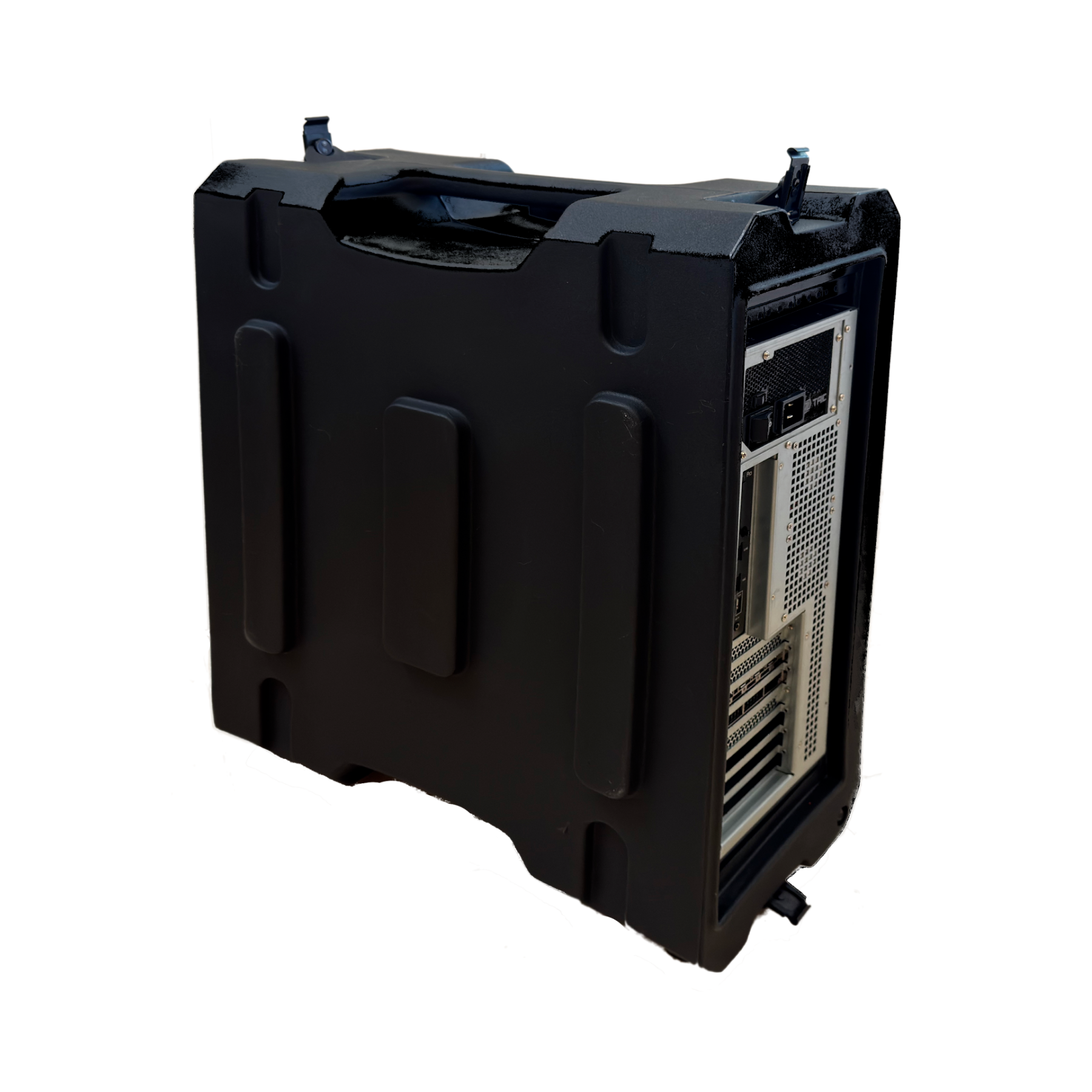
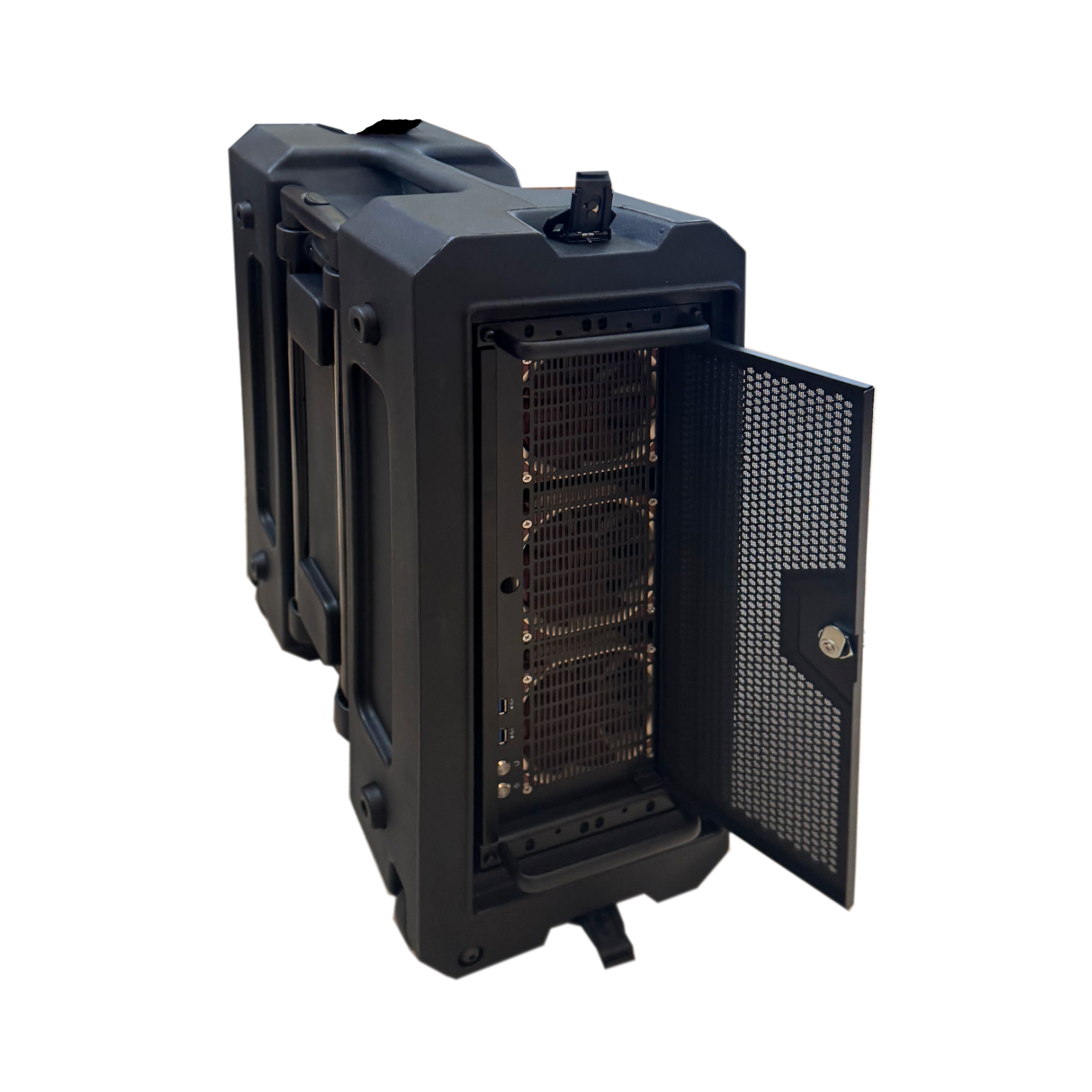
A CI Professional Server II—dual AMD Radeon Pro W7800 GPUs and Threadripper PRO 9965WX—was deployed inside Chimera’s SoCal data center. Shipshape’s mobile and web clients connected through a Cloudflare Zero-Trust perimeter, ensuring encrypted ingress and identity verification.
The following AI subsystems ran entirely on-premises:
LLM reasoning: Gemma-class LLM for dialogue + diagnostic reasoning
Speech-to-text: Whisper-class STT
Text-to-speech: VibeVoice-class TTS
RAG retrieval: Private home-maintenance knowledge base + manual database
Logging + audit: Encrypted local storage with deterministic tracing
Performance, uptime, and cost were measured against Shipshape’s previous cloud deployment using A10G and A100 GPU equivalents.
Results
0 data exposure events: All household data remained local to Shipshape’s environment
Latency reduced 15%: Due to co-location of inference + data storage
99.6% uptime: Across SoCal and Austin user tests
73% 5-year projected TCO reduction vs. AWS/GCP/Azure
Predictable OpEx: Fixed colocation + power instead of variable GPU billing
Modular scaling: Additional regions can be added node-by-node without architectural changes
The pilot confirms that a sovereign AI architecture can deliver privacy, performance, and economics superior to cloud-based inference for consumer IoT.
UnCloud the Smart Home
As AI spreads across the Internet of Things, the tension between automation and sovereignty is especially acute inside private homes. Smart thermostats, sump pumps, HVAC systems, and electrical panels now emit a continuous stream of data about how people live.
Shipshape (shipshape.ai) offers homeowners an AI-driven platform for smarter home management. Its virtual assistant, Sam, helps monitor household systems, interpret faults, recommend maintenance, and connect users to service providers. In short, Sam is “your trusted AI home assistant” for preventing problems before they become expensive emergencies.
But that trust has a condition: homeowners do not want their domestic telemetry sent to opaque, multi-tenant cloud AI stacks. At the same time, cloud-based LLM and voice workloads can make unit economics fragile, especially for a startup serving always-on use cases.
Shipshape and Chimera Computing Corp set out to answer a practical question:
Can Sam’s “brain” live in a private, sovereign environment and still deliver cloud-grade intelligence, responsiveness, and scalability?
The Privacy Challenge for Smart Homes
Shipshape provides homeowners with an intelligent system for preventing costly water damage and, for IoT home integrators, a seamless system for installation. Core to this experience is Sam, a multimodal assistant offering:
Home diagnostics
Maintenance advice
Fault interpretation
Service recommendations
To operate effectively, Sam requires access to deeply personal household data: appliance telemetry, environmental readings, repair history, and user-submitted multimedia. A cloud-only architecture risked homeowner distrust, regulatory scrutiny, and escalating GPU costs.
Shipshape needed Sam to:
Understand natural language
Listen and respond in real time (Whisper-class STT, VibeVoice-class TTS)
Reason over proprietary home-maintenance data via RAG
All without externalizing homeowner data or accepting unpredictable cloud economics.
Key Problems Identified
Privacy Risk
Sending raw household data to cloud AI systems creates user anxiety and broadens exposure surfaces.Cost Variability
Cloud GPU billing (A10G/A100 class) can fluctuate 3–10× month-to-month depending on usage.Limited Architectural Control
Vendor-managed LLM/RAG stacks restrict experimentation, introspection, and optimization.Latency & Reliability Constraints
Distributed cloud pipelines introduce unpredictable lag which was unacceptable for a voice-first assistant.
Shipshape required an AI backend that was private, stable, fast, and customizable without the burden of building its own data center.
Solution: A Fully Sovereign AI Backend Powered by Chimera Computing Corp
Chimera Computing Corp deployed a single-tenant, on-premises backend designed specifically for Shipshape’s multimodal workloads.

Hardware Foundation
Shipshape prioritized processing speed and scalability.
We built their MVP on Chimera’s Professional AMD 25II, Rack. This system offers enterprise-grade reliability and speed for a limited number of users.
Performance and Customization
Public cloud AI services are designed for scale rather than specialization. Shipshape needed a system tailored to the unique demands of real-time home diagnostics and natural voice interaction. The company could not rely on a generic cloud configuration that introduced variable latency, unpredictable cost, or limits on model tuning.
Chimera Computing Corp designed a dedicated on-premises system that allowed Sam, Shipshape’s home assistant, to operate with consistent performance and complete architectural control. The configuration supported high-bandwidth communication between every stage of the pipeline. Voice recognition, model reasoning, retrieval, and response generation ran inside the same physical environment. This eliminated the network delays that are common in cloud-based inference.
A Tailored Dual-GPU Architecture
The Professional Server 25II used a dual-GPU layout.
One GPU was dedicated to a Gemma-class LLM responsible for dialogue and decision support.
The second GPU handled Whisper-class speech recognition and VibeVoice-class speech synthesis.
Separating these workloads removed resource contention and allowed Sam to listen, reason, and respond at the same time. In a cloud environment, these tasks would require separate virtual machines and would communicate over a distributed network. This often creates delays and makes performance harder to predict. The on-premises system delivered consistent sub-second conversational flow.
Local Knowledge Retrieval
Shipshape’s knowledge base includes repair histories, proprietary diagnostic information, appliance manuals, and structured maintenance guides. This data is central to Sam’s value, and it needed to remain fully private.
The local server stored the entire knowledge base in a fast, encrypted RAG store. Every lookup occurred inside the Shipshape and Chimera controlled environment. No external API calls were required. Retrieval remained fast even during periods of heavy load because the vector store and inference engines shared the same high-bandwidth local bus.
Flexible and Extensible Software Stack
Chimera deployed an open and fully transparent software stack. All services ran in containers, and the system used KVM for lightweight virtualization. Shipshape engineers could add or replace models without negotiating with a cloud vendor. They could also fine-tune model behavior based on real user feedback.
This flexibility helped Shipshape introduce new features and update Sam’s behavior quickly. The architecture does not depend on a single model or framework. Any component can be upgraded without rearchitecting the system.
Measured Performance Gains
Testing in Southern California and Austin shows that the on-premises configuration consistently outperformed the previous cloud setup. Average response time improved by 15 percent, and speech recognition latency dropped by 17 percent. Local inference also reduced token-generation lag during longer explanations or troubleshooting sessions.
System uptime reached 100 percent during the pilot. Redundant networking and power systems maintained stability, and container-based orchestration allowed updates without interrupting service. Users described the interactions as smoother and more natural, which is critical for adoption in a consumer environment.
A Platform Designed for Growth
The system is designed to scale without major redesign. Additional nodes can be added within Chimera’s colocation facility, and new regions can be deployed with the same template. Model upgrades, larger knowledge bases, or new speech models require only a container update.
This approach gives Shipshape a long-term technical foundation. It supports new capabilities, deeper integrations with smart-home devices, and a growing user base without the volatility of cloud GPU pricing or multi-tenant service constraints.
Security and Compliance
Shipshape’s pilot required an AI system that could protect household data with the same rigor used in regulated industries. The on-premises deployment was designed for containment rather than mitigation. Every stage of inference, retrieval, and storage occurred inside Chimera Computing Corp’s controlled server environment. No data moved outside the private network, and no third-party APIs processed voice or text.
This design removed the most common source of exposure in cloud AI systems: multi-tenant infrastructure and shared API boundaries. Instead of trusting external services to handle sensitive home information, the system preserved strict control over data residency, access, and auditability.
Local-Only Processing and Encrypted Storage
All short-term and long-term storage on the server used AES-256 encryption. Every interaction, including voice input and system logs, remained within the Shipshape and Chimera perimeter. Communication between client applications and the server occurred exclusively through encrypted TLS 1.3 channels. This ensured that even routine API calls between Sam and the backend were shielded from interception.
The server’s NVMe drives included hardware-accelerated encryption, and the 32 TB SATA storage array served as the primary location for logs, diagnostic outputs, and the fast-access maintenance knowledge base. No data was written to external storage or transmitted to cloud services.
Zero-Trust Access and Network Controls
All external access to the system passed through a zero-trust perimeter provided by Cloudflare. This layer verified identity, encrypted connections, and protected the server from unauthorized traffic. Only authenticated requests from Shipshape’s mobile and web clients reached the backend. No public endpoints were exposed.
This configuration prevented common attack vectors, including unauthorized probing, lateral movement from compromised devices, and credential replay attacks. The zero-trust ingress also supplied DDoS protection, which ensured reliable service availability during periods of high network activity.
Operational Safeguards and Auditability
Chimera implemented safeguards aligned with HIPAA, SOC 2, and FIPS 140-2 principles, even though formal certification was not required for this pilot. These safeguards included:
Local audit logs for every inference, access event, and system update
Role-based access control for configuration and maintenance operations
Multi-factor authentication for administrative connections
Encrypted log replication to a secondary storage volume for tamper resistance
These measures produced a transparent operational environment. Shipshape engineers could trace every data flow and every inference event, allowing them to understand system behavior without relying on opaque cloud tooling.
Physical Security and Reliability
The server operated inside Chimera’s Southern California colocation facility. The rack included biometric access controls, 24/7 surveillance, redundant power systems, and conditioned network paths. These physical protections reinforced the logical perimeter and provided the reliability needed for real-time home assistance workloads.
During the pilot period, the system recorded zero exposure incidents. The containment architecture kept homeowner data within the private rack, and the encrypted storage layers ensured that even in the case of physical hardware failure, data was protected against unauthorized access.
Privacy as Practical Advantage
Shipshape’s team gained complete visibility into the entire system. All inference, storage, and reasoning occurred under their control, which allowed them to verify how the assistant handled data and how models behaved. This level of transparency is impossible to achieve with multi-tenant cloud systems.
The same protections that ensured privacy also improved performance and reduced cost. Local inference results in lower latency. Local storage eliminates egress fees. Local control enables consistent performance without the variability of shared cloud hardware. Privacy stopped being a compliance obligation and became a structural advantage.
Cost Efficiency and Financial Predictability
Shipshape’s pilot demonstrated that on-premises AI can deliver a substantial financial advantage over cloud-dependent GPU workloads. The on-premises model replaced variable, usage-based billing with a predictable cost structure that can be modeled years in advance. This was particularly important for Shipshape, whose assistant Sam operates continuously and relies on real-time speech and language processing.
A Clearer Financial Model
Chimera Computing Corp developed a total cost of ownership model based on continuous 24/7 inference workloads. The calculation included server financing, power consumption, colocation services, maintenance, and bandwidth costs. Cloud comparisons were based on publicly available pricing for AWS, Azure, and Google Cloud GPU instances that approximate the performance of the dual AMD W7800 configuration used in the pilot.
Cloud providers charge by the hour for GPU time, which makes costs rise quickly for services that run continuously. These platforms also bill separately for storage, bandwidth, request volume, and data egress. Shipshape’s previous cloud deployment saw monthly expenses fluctuate based on user interactions and model load. This variability made financial planning difficult and introduced uncertainty into long-term growth projections.
Modeled Five-Year Total Cost of Ownership
The financial analysis found that AWS, Azure, and Google Cloud were consistently more expensive across all equivalent instance types. When comparing the Chimera server to common cloud offerings, several patterns emerged:
An AWS A10G instance accumulated more than $86,000 in operating costs over five years.
Azure and Google Cloud A100-class instances reached between $146,000 and $158,000 over the same period.
An AWS A100 configuration often exceeded $175,000 due to higher hourly pricing.
By contrast, the Professional 25II + Chimera Tier I colocation used in the pilot would cost approximately $41,850 in total cost over five years, including both operating expenses and the initial financed hardware cost. This represented a reduction of more than 73% percent compared to the closest cloud alternative, and a reduction of 75 to 80 percent compared to the higher-performance cloud tiers.
Because colocation and power were billed at fixed monthly rates, Shipshape gained a predictable cost structure and eliminated the risk of price spikes caused by cloud billing. This stability is particularly valuable for small and mid-sized companies that need to forecast cash flow and evaluate long-term product margins.
Operational Benefits of Ownership
Owning the hardware gave Shipshape direct control over infrastructure and eliminated the need to rent capacity from third parties. The server resources were always available without competing for GPU time or paying a premium during periods of high cloud demand.
This model also improved unit economics. As more homeowners used Shipshape’s assistant, the marginal cost of each additional interaction approached zero. Unlike in the cloud, where increased usage directly translates to higher bills, the on-premises server supported natural growth without requiring proportional increases in operating costs.
Scalable Growth Without Elastic Pricing
The pilot showed that Shipshape could expand regionally by adding more 4U nodes in the same colocation facility or in new geographic locations. Each node operates independently and delivers consistent performance, which allows the company to scale with demand while keeping costs predictable.
This modular approach also avoids the architectural lock-in that comes with cloud AI services. Shipshape can upgrade hardware, adopt new models, or adjust its inference pipeline without depending on a cloud provider’s product roadmap or pricing decisions.
Cost Predictability as Strategic Leverage
For an emerging company like Shipshape, stable and transparent operating expenses create a foundation for sustainable growth. Predictable costs make it easier to plan product updates, negotiate partnerships, and build investor confidence. They also provide a competitive advantage over cloud-first solutions that struggle with fluctuating bills and limited transparency into GPU availability.
The financial outcome of the pilot was clear. Shipshape strengthened its long-term economics by choosing a model that preserved its budget, improved margins, and supported predictable expansion. Cost efficiency became a structural feature of the AI system, not an afterthought or optimization exercise.
Conclusion
The Shipshape and Chimera Computing Corp pilot demonstrates that on-premises AI is not only feasible for real-world IoT applications but often superior to cloud-based deployments. Shipshape set out to build a home assistant that homeowners could trust, and the pilot showed that a private AI backend can deliver that trust while also improving performance and lowering long-term costs.
By processing all inference locally, Shipshape preserved the privacy of household data and eliminated exposure to third-party AI services. This approach directly increased user confidence and encouraged more meaningful engagement with the system. The architecture also produced measurable performance gains, including lower latency, smoother voice interactions, and greater reliability during continuous operation.
The financial results were equally decisive. The on-premises configuration provided a predictable cost structure that replaced variable cloud billing with a stable operating model. Over a five-year horizon, Shipshape’s total cost of ownership was significantly lower than comparable cloud GPU deployments. This gave the company durable economic leverage as it prepares to scale Sam to more homes and more regions.
Perhaps most importantly, Shipshape now controls every layer of its AI stack. The system can evolve with new models, new capabilities, and new partnerships without waiting for cloud providers to release features or adjust pricing. This control strengthens the company’s technical independence and preserves the value of its intellectual property.
The pilot confirmed three essential advantages. First, private and local AI protects user data and increases adoption. Second, dedicated hardware offers predictable costs and removes cloud volatility. Third, customization and control allow Shipshape to build an assistant tailored to its mission rather than constrained by cloud service limitations.
As AI becomes embedded in daily life, the organizations that succeed will be those that deliver intelligence without compromising privacy or stability. Shipshape’s on-premises deployment is a model for how smaller companies can adopt AI responsibly while maintaining full ownership of their data and infrastructure. The partnership with Chimera Computing Corp allowed Shipshape to realize this vision and provides a strong foundation for future growth.
For investors, providers, and leaders, the message is clear: The future of AI belongs to those who control it.