
Stewardship Systems: Building Ethical & Sustainable AI Operations
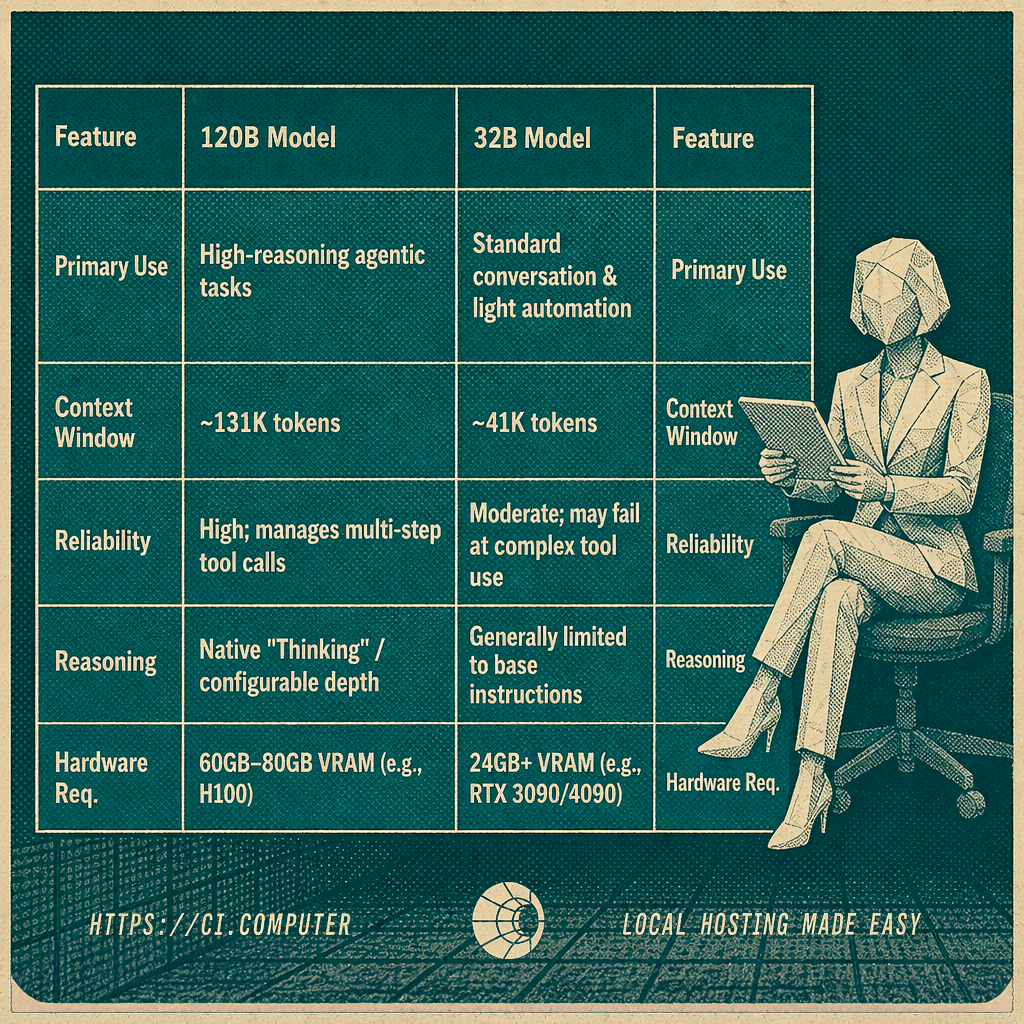
Our data floats in their cloud
Series: From Cloud Insecurity To Local Sovereignty
Thesis Machine Learning through AI continues to be woven into every layer of infrastructure. Responsible technologists are shifting from speed and scale to stewardship. Designing systems that conserve energy, respect privacy, and remain auditable is no longer optional. These steps create a solid foundation for sustainable intelligence.
Reader Level: Practitioner
Reading Time: ~15 minutes
From Hybrid Design to Responsible Operation
In our last article, we explored how hybrid AI balances local control with cloud scale. The next challenge is subtler but more enduring: how we care for the systems we build.
Modern AI doesn’t end with deployment. Every model, dataset, and inference pipeline has a footprint. Running a model locally or in the cloud involves choices about where energy comes from, how data is stored, and who maintains visibility when systems evolve. Two paths diverge, and the choice is simple: consideration or convenience. Those who become fluent in digital tools can make an ethical choice more quickly.
Recent research from the International Energy Agency (2025) estimates that AI workloads could account for up to 4 percent of global electricity demand by 2030 if efficiency trends stall. Meanwhile, peer-reviewed studies from Imperial College London (Zha et al., 2024) and Cornell Tech (Chen et al., 2025) confirm that local or hybrid deployments can significantly reduce transfer energy and improve data governance.
Stewardship begins where convenience ends—with awareness of the trade-offs between automation, oversight, and accountability.
Example
In the tool built for ShipShape.AI, CI analyzed the process:
Camera → Mobile App (preprocess) → Edge GPU (model) → Form Filler (app) → Local API → Private DB (encrypted) → Backup (onsite)
For each hop, capture:
Data in/out: formats, size (KB/MB), PII classification.
Compute: device, accelerator, avg power draw (W), active time (s).
Network: interface (USB/Wi-Fi/LAN), egress risk (Y/N), counting the number of hops.
Storage: location, encryption at rest, retention.
Controls: auth, audit, fail/rollback.
Assign a data exposure score (1-5)
0 = on-device only, encrypted at rest, no third-party hops
1 = local network only, strong auth, audited
2 = intermittent external service with tenant isolation
3 = persistent external dependency or third-party analytics
Privacy & governance checklist (yes/no)
Data never leaves private hardware
All PII classified and minimized
EXIF/biometrics stripped pre-storage
Encryption at rest + in transit
Local accounts, MFA for admins
Audit log for every data access
Retention & deletion policy defined
Disaster recovery tested offline
Our Data Fuels Their Profits.
Reflection
If responsibility could be measured, what metrics would matter most in your stack?
System efficiency and resource use?
Model behaviour and alignment?
Data integrity and privacy?
Ecological and supply chain?
Orgainizational governance?
User fluency and access?
The Misconception of Clean Automation
Automation once promised neutrality: less human error, more consistency, freedom from the grind. But as systems grow autonomous, their environmental and social costs lurk beneath abstraction layers. Researchers at the AI Now Institute (2025) found that cloud-hosted AI pipelines can externalize both carbon and labor costs, relying on unseen data-labeling workforces and distant power grids.
By contrast, local or edge deployments concentrate accountability. When computation happens within sight—on a workstation or in a community data center—its energy, maintenance, and impact become visible. That proximity transforms responsibility from a policy into a practice.
Example
A 2025 study in the International Journal of Energy Research showed that edge inference can reduce total energy use by up to 30 percent for continuous workloads, primarily by cutting data-transfer overhead. The same study linked transparency in energy accounting with higher user trust and compliance outcomes.
Automation is not the enemy of sustainability; opacity is. Systems designed without visible feedback loops inevitably drift toward inefficiency.

The Principle of Transparency
Transparency is the architectural counterpart of ethics.
It’s what turns moral intent into mechanical reality. When users can see where their data flows, how it transforms, and why models behave as they do, they gain the ability to govern technology instead of merely trusting it.
A 2025 Cornell Tech / ETH Zurich survey (SoK: The Privacy Paradox of Large Language Models) underscored this point: local inference environments can generate verifiable, end-to-end data-handling records that proprietary APIs cannot. The difference is structural, not philosophical—when compute happens under your control, visibility isn’t a feature, it’s a side effect.
Similarly, IEEE’s 2024 analyses found that open-format model cards, standardized metadata, and reproducible training pipelines enable independent auditing—an essential requirement for sectors that handle public trust: healthcare, education, finance, and civic technology.
But transparency is not just an engineering concern. It’s a design discipline.
It manifests in clear documentation, modular boundaries, and version-controlled datasets that reveal their lineage and intent. These practices convert accountability from aspiration into structure—a system that can explain itself, evolve responsibly, and be repaired when something goes wrong.
Open-source software has long treated awareness as a right, not a luxury. Proprietary APIs, in contrast, often reduce visibility to a privilege that is “easier to use” but gated by terms of service or NDAs. Their interfaces show only what their organization has decided to allow users to see, while telemetry runs silently in the background. In a transparent architecture, that asymmetry dissolves: every query leaves a record, every model declares its origin, and every update carries a change-log.
Transparency, then, is not about radical openness for its own sake. It’s about traceable trust— the ability to inspect, verify, and hold systems accountable.
Example
Hospitals participating in federated-learning trials (Imperial College London, 2024) stored patient data locally while synchronizing only encrypted model updates.
This method preserved GDPR compliance and improved audit readiness across multiple jurisdictions.
Action
Publish a short “model statement” for any AI you deploy: list data sources, update frequency, and known limitations.
Reflection
If your users inspected your pipeline tomorrow, would it pass an ethical audit?

The Economics of Energy Awareness
Sustainability is not only moral; it’s material. Power budgets, cooling loads, and network bandwidth all translate to economic and ecological impact. We’ve explored this impact throughout the Cloud2Local series, making the point that both individuals and businesses can benefit from a considerate approach to compute. Real-world examples support this
The International Journal of Energy Research (Rajendran et al., 2025) compared cloud and local inference across machine-learning workloads. For consistent daily use, local GPUs consumed less energy and achieved lower lifetime cost per inference once amortized over two years. The tipping point occurred when workloads exceeded roughly 3 hours of inference per day.
Energy-aware scheduling and quantized models amplify these gains. Studies from Princeton and Stanford (2024) demonstrated that 4-bit or 8-bit quantization can halve energy draw with minimal accuracy loss.
Example
According to the IEA’s 2025 Data-Centre Review, a mid-range 300 W GPU running eight hours daily costs roughly USD 8 per month in electricity—versus cloud inference costs 5–10 times higher for equivalent throughput.
The CI Personal Server draws roughly 180 watts at full load. Using the U.S. national average electricity rate of $0.17 per kWh (May 2025), continuous inference use for six hours a day over an entire month would add about $8 to a home power bill. In other words, even under sustained multimodal workloads, the total cost of running private, on-premise AI is roughly equivalent to a ChatGPT Plus-style subscription—except the compute, memory, and data belong to you.

CI Home Server in Black
The Practice of Lifecycle Design
Ethical operation is a process, not a state. Models drift, datasets decay, and dependencies age. The most responsible systems anticipate this entropy.
IEEE 2024’s Survey on Efficient Inference identifies lifecycle transparency, documenting when and how models are retrained, as a key sustainability factor. Unmaintained models often produce outdated or biased outputs that quietly propagate errors.
Open-source communities already apply lifecycle thinking. The ONNX format and containerized environments (Docker, Podman) allow reproducible builds across time and hardware. Academic consortia, documented in the University of South Florida Libraries Self-Hosting Guide (2023), maintain mirrored inference containers both locally and in the cloud to ensure continuity after outages or software updates.

CI Home Server in White
The Framework of Shared Accountability
No single engineer or organization controls the full AI lifecycle. Supply chains span hardware miners, data annotators, API providers, and end-users. Stewardship means acknowledging interdependence and building systems that distribute accountability fairly.
Oxford Internet Institute research (Lehdonvirta, 2024) on Big AI Infrastructure Dependence highlights how early cloud consolidation centralized both power and liability. In contrast, federated and open frameworks re-decentralize governance. The shift toward community-maintained model repositories, such as Hugging Face’s transparency standards, demonstrates that shared stewardship scales better than unilateral control.
Example
University research consortia routinely maintain containerized inference environments across local and cloud sites. This practice, described in USF Libraries 2023 Self-Hosting Guide and IEEE 2024 LLM Efficiency Survey, supports reproducibility and rapid disaster recovery—an essential criterion for scientific data integrity.
Practice Action
Containerize one of your AI workflows using Docker or Podman. Verify identical performance locally and remotely. Note setup time, data handling, and transparency differences.
Reflection
What design choices today will make your system adaptable five years from now?
Toward an Ecology of Intelligence
Stewardship is the bridge between innovation and integrity. The hybrid architectures we explored previously are only sustainable when guided by continuous care—transparent processes, energy awareness, and shared accountability.
Responsible technologists treat infrastructure as ecology: every watt, packet, and parameter belongs to a living system of people and machines.
By measuring what we build and revealing what we use, we align intelligence with intention.
Series: From Cloud to Local, 25-002
Citations & References
Rajendran V., Kumar K., Singh S. (2025). Comparative Analysis of Energy Reduction and Service-Level Agreement Compliance in Cloud and Edge Computing: A Machine Learning Perspective. International Journal of Energy Research. https://www.cureusjournals.com
Zha S., Rueckert R., Batchelor J. (2024). Local Large Language Models for Complex Structured Tasks. Imperial College London, University of Manchester. https://pubmed.ncbi.nlm.nih.gov
Chen S., Birnbaum E., Juels A. et al. (2025). SoK: The Privacy Paradox of Large Language Models. Cornell Tech, ETH Zurich. https://arxiv.org
International Energy Agency (2025). Data Centre Energy Use: Critical Review of Models and Results. https://www.iea-4e.org/wp-content/uploads/2025/05/Data-Centre-Energy-Use-Critical-Review-of-Models-and-Results.pdf
University of South Florida Libraries (2023). Self Hosting AIs for Research. https://guides.lib.usf.edu/AI/selfhosting
Zhou Z., Ning X., Hong K. et al. (2024). A Survey on Efficient Inference for Large Language Models.IEEE. https://arxiv.org/pdf/2404.14294
