
The Return of the Local: Building Confidence in Self-Hosted AI

Our data floats in their cloud
Series: From Cloud Insecurity To Local Sovereignty
Thesis Local AI is no longer a retro dream—it’s a practical shift made possible by smaller models, affordable GPUs, and open frameworks for edge inference. This essay shows why running intelligence on your own hardware restores visibility, privacy, and skill without rejecting the cloud itself.
Reader Level: Practitioner
Reading Time: ~15 minutes
When Power Returns Home
For over a decade, “the cloud” defined what modern computing meant. It offered convenience, scale, and reach—a promise that intelligence could be summoned from anywhere, for anyone, on demand. The pitch was seductive: no maintenance, no waiting, no friction.
But convenience is not the same as control. When every creative act or analytic query travels thousands of miles to a data center, we lose visibility into the machinery shaping our work. The real miracle of 2025 is that this distance is no longer required. Advances in quantization, parameter-efficient tuning, and GPU efficiency mean what once required racks of servers can now fit on a single workstation.
Local AI isn’t nostalgia for on-prem servers. It’s a recognition that proximity brings precision—and with it, responsibility. When your tools live near your data, you can measure them, understand them, and shape them to your values.
The Myth of Endless Scale
Core Insight
For most of the 2010s, “infinite scale” was both the dream and the justification for cloud dependence. It sounded liberating: elastic servers that expanded with our ambitions. The reality was that AI simply couldn’t run anywhere else. In 2015, a top-end NVIDIA Tesla K80 offered 12 GB of VRAM at around $5,000. Hosting a single transformer model required multiple cards stitched together through complex data pipelines. Cloud platforms made that infrastructure accessible—but also made themselves indispensable.
Those constraints are gone. A 2025 RTX 5090 delivers 24 GB VRAM for under $2,000 and handles quantized 70 B-parameter models locally. Compute efficiency per watt has improved tenfold in a decade (IEEE, 2024). The barrier between “enterprise-grade AI” and “personal experimentation” has largely dissolved.
Yet the old mindset persists. Many teams still over-scale by default, treating every task as if it needs global capacity. The cost of that assumption is measured in both money and comprehension. When someone else’s infrastructure decides how your system scales, you inherit their biases—how they log, cache, throttle, and retain your data.
Our Data Fuels Their Profits.
Example
A developer comparing Stable Diffusion on AWS A100 GPUs vs. local RTX 4090 reports a near-identical experience at one-tenth the cost once workloads surpass 20 hours per month (BaCloud Guide, 2025).
The Technology That Made Local Possible
Core Insight
Three technical breakthroughs converged to make the local renaissance real: quantization, LoRA/QLoRA fine-tuning, and affordable GPUs.
Quantization compresses model weights from 32-bit floating points to 4 or 8 bits, cutting memory and power use by as much as 75 % while maintaining accuracy within 1–2 points (Princeton & Stanford, 2024). It’s the digital equivalent of learning to speak more precisely—with fewer syllables but the same meaning.
LoRA (Low-Rank Adaptation) and its variants (QLoRA, PEFT, QA-LoRA) let users fine-tune large models without retraining everything. Instead of rewriting 100 billion parameters, you adjust a few million. That reduces VRAM demands to under 8 GB for many modern 7B–13B models (Srinivasan & Pal, 2025).
The final piece was hardware democratization. Consumer GPUs now deliver over 100 TFLOPS of compute at under 350 watts. Combined with optimized runtimes (GGUF, vLLM, TensorRT-LLM), this means high-end laptops and desktops can execute what once demanded a rack of servers.
Example
A quantized 7B model occupies about 4 GB of memory. Running it on an 8 GB GPU, a researcher at the University of South Florida demonstrated inference latency under 0.5 seconds—comparable to mid-tier cloud APIs.
Action:
Install Ollama
Go to: https://ollama.com/download
Download for your system (Mac, Windows, or Linux).
Run the installer — it sets everything up automatically.
Open a terminal (or Command Prompt)
Once installed, you can use it from the command line or any application with a terminal
Pull a model
Pull a model directly, by using the command: ollama pull llama3
Run a model
Run a model directly, by using the command: ollama run llama3
Reflection
You’ll see that your machine, not a distant server, is now the capable one. When the barrier to entry drops from a data center to your desk, what becomes possible?
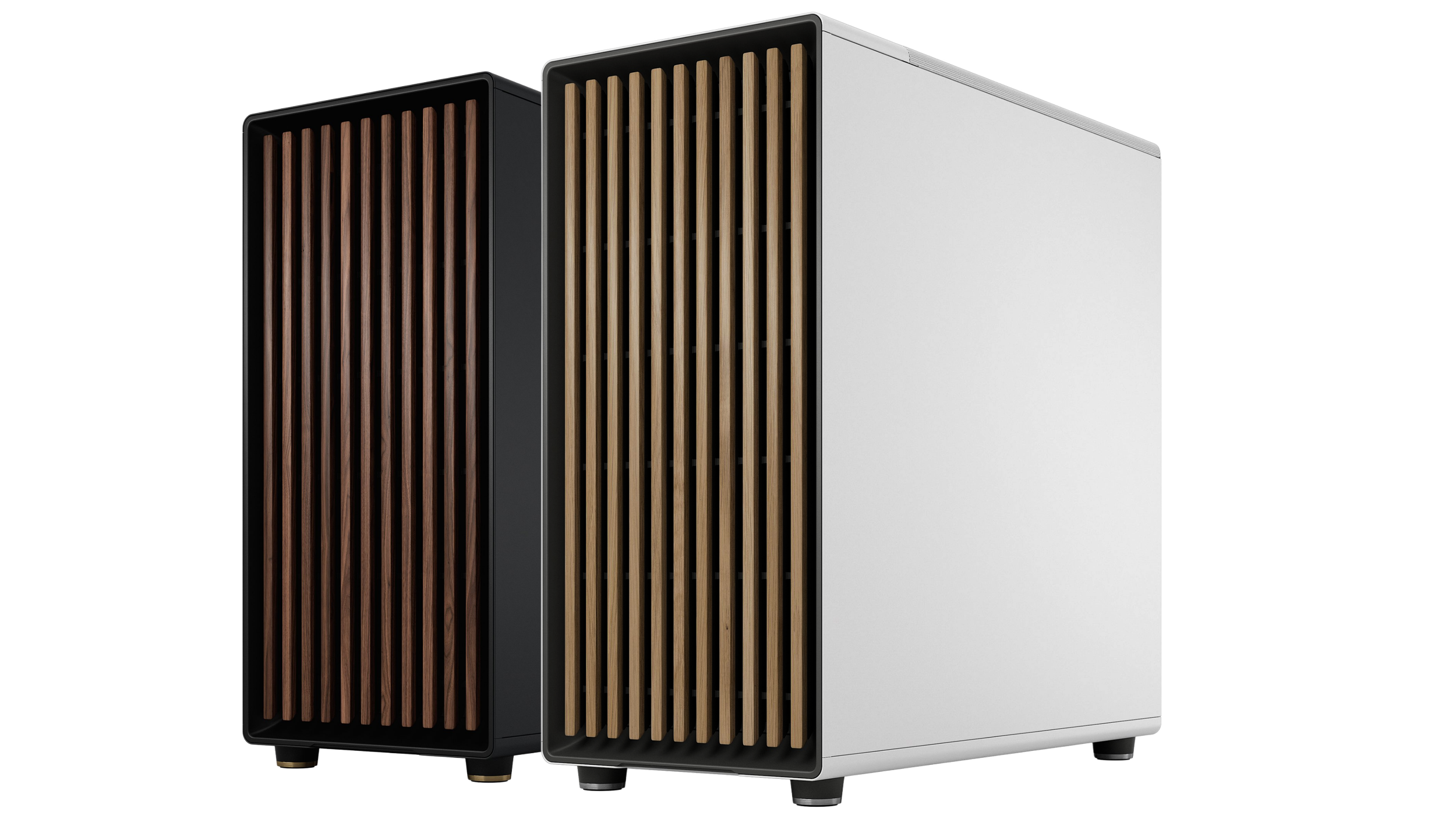
Companion Intelligence Home Servers for the family
Precision Over Power: Why Local Is Not Nostalgia
Core Insight
The phrase “run it locally” once evoked images of beige servers and forgotten cables. Today it signals something entirely different: precision. Cloud AI optimizes for throughput—the ability to serve billions of requests uniformly. Local AI optimizes for context—the ability to serve you specifically.
When computation lives close to the problem, nuance survives. Cloud APIs, by design, strip away variability: they normalize prompts, apply hidden filters, and log interactions to train future models. Local systems can be tuned for sensitivity rather than scale. They run quietly, privately, in rhythm with your workflow instead of someone else’s schedule.
The Privacy Paradox of Large Language Models (Chen et al., 2025) shows that on-device inference eliminates broad data exposure, reducing attack surfaces and regulatory risk. But the deeper gain is human: local experimentation rebuilds understanding. Each configuration teaches you how reasoning unfolds inside the model. Abstraction becomes visible again.
Example
A product-design studio in Berlin prototypes ideas using Mistral 7B and ComfyUI locally. The latency drop—from 1.5 seconds per API call to 0.2 seconds on-device—transformed their creative process. What was once asynchronous became conversational. Their intellectual property never left the building, and API expenses fell 40 %.
Practice:
Run a prompt both locally and through a hosted API. Measure:
Response time (latency)
Token accuracy / coherence
Cost per 1 K tokens
Depending on your hardware, model, and interface, you’ll notice the difference not just in cost, but also in speed.
Reflection:
When output becomes immediate and private, does your creative rhythm change?
The New Economics of Edge Compute
Core Insight
Edge computing—running workloads near where data is produced—has moved from theory to necessity. Cloud bills now rival rent for many small studios. Each API call, data-egress fee, or storage cycle is part of an invisible “cloud tax.”
Local inference changes that equation. Hardware amortizes; the cost stays fixed. Energy usage becomes measurable. According to the International Journal of Energy Research (2025), edge inference consumes up to 60 % less energy than cloud equivalents for sustained workloads. Eliminating long-distance transfers cuts waste while granting control over power sourcing.
Example
A 300 W GPU running eight hours a day uses roughly 72 kWh per month—about $8 in electricity (US average rates). Equivalent token generation through a commercial LLM API costs $250–$500 monthly. The crossover point—where local becomes cheaper—often arrives within six months of steady use.
Practice:
Track your own “break-even” point with tools such as Infracost or AWS Pricing Explorer. Include:
Storage (GB × months)
API calls / token volume
Data transfer costs
Compare these against your local GPU’s power draw. The insight isn’t merely economic—it’s ecological. You’re reducing infrastructure miles per computation.
Reflection:
At what point does control become cheaper than convenience?
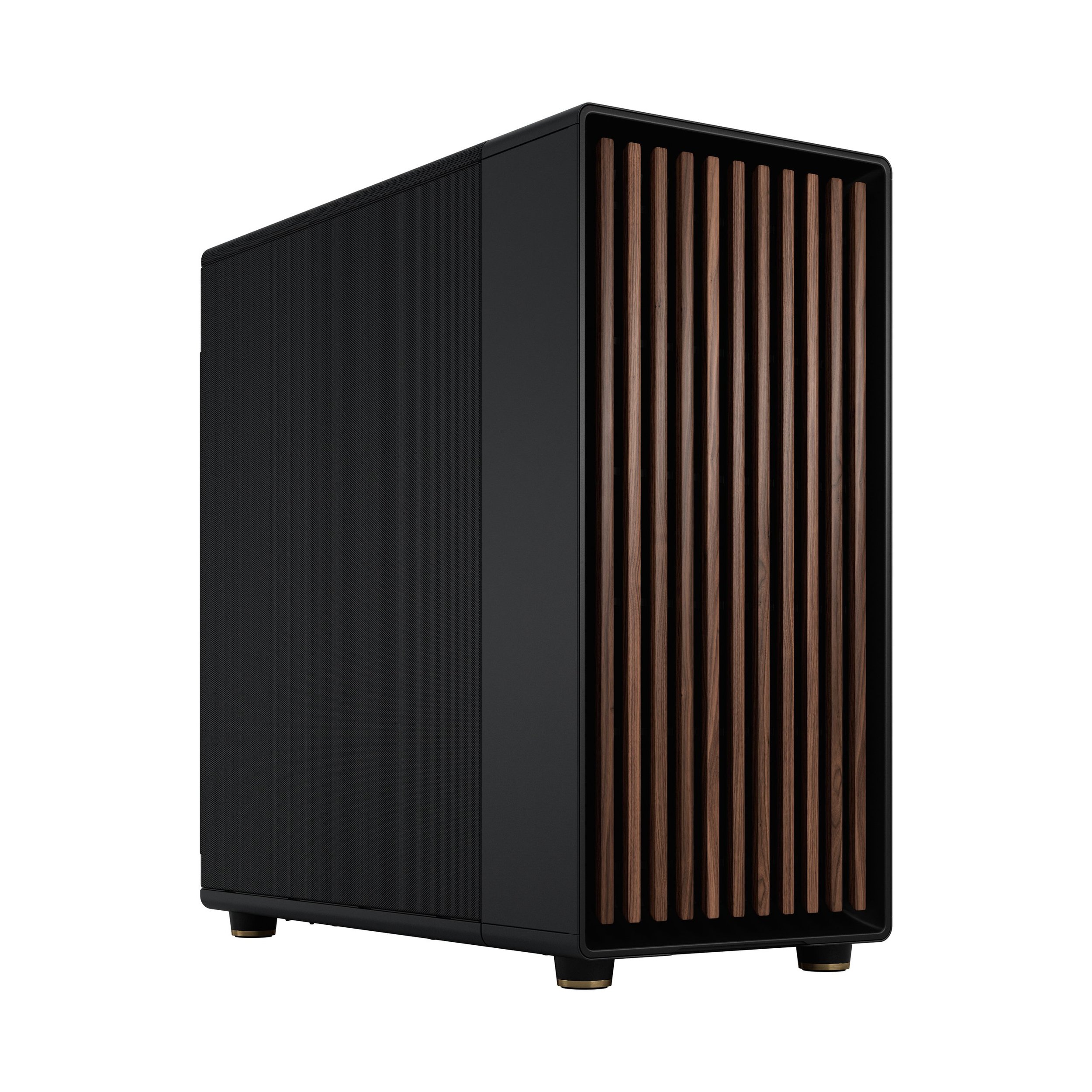
Building Your First Local Model
Confidence comes from contact. Installing and running a local model reveals that AI isn’t an abstraction—it’s software you can measure, modify, and trust. Modern tools hide the hard parts while keeping the logic visible, restoring literacy without requiring expertise.
Stay tuned for Companion Intelligence tutorials.

The Responsible Edge
The return of the local is not rebellion—it’s stewardship.
Cloud computing expanded our reach, but it also abstracted our responsibility. Local AI brings those two back into balance. Running inference nearby doesn’t mean rejecting shared infrastructure; it means participating with awareness. Each kilowatt, each dataset, each prompt becomes traceable and accountable.
Visibility breeds care. When you can see what your system consumes, you naturally optimize. When you can audit what it remembers, you protect privacy. The edge isn’t an endpoint—it’s the beginning of a more human-scaled relationship with technology.
Next in the series: Designing the Hybrid Future explores how local and distributed systems can cooperate responsibly.
Practice:
Choose one model under 10 billion parameters—Mistral 7B, Phi-3 mini, or Gemma 2B.
Run it locally using Ollama or LM Studio.
Monitor your GPU, CPU, and energy use while prompting.
Compare performance, cost, and privacy benefits against a cloud API equivalent.
Stay tuned for more series from Companion Intelligence where we will be sharing ticks and tips from the studio to help you get to the next level in you #goLocal goals.
Documenting your current process will reveal where you depend on the cloud and where you don’t need to.
Reflection:
What would it mean for your professional confidence if your tools lived close enough to touch?
How might shared infrastructure—community clouds, co-ops, research hubs—turn personal control into collective strength?
Series: From Cloud to Local, 25-002
Citations & References
Chen, S., Birnbaum, E., Juels, A., et al. (2025). SoK: The privacy paradox of large language models. ACM Digital Library. https://dl.acm.org/doi/10.1145/3708821.3733888acm
Zha, S., Rueckert, R., & Batchelor, J. (2024). Local large language models for complex structured tasks. PubMed Central. https://pmc.ncbi.nlm.nih.gov/articles/PMC11141822/pmc.ncbi.nlm.nih
University of South Florida Libraries. (2023). Self-hosting AIs for research: AI tools and resources. https://guides.lib.usf.edu/AI/selfhostinguides.lib.usf
Srinivasan, V., & Pal, S. (2025). Profiling LoRA/QLoRA fine-tuning efficiency on consumer GPUs (arXiv preprint). https://arxiv.org/pdf/2509.12229.pdfarxiv
Goldsmith, A., Saha, R., & Pilanci, M. (2024, November 18). Leaner large language models could enable efficient local use on phones and laptops. Princeton University, School of Engineering and Applied Science. https://engineering.princeton.edu/news/2024/11/18/leaner-large-language-models-could-enable-efficient-local-use-phones-and-laptopsengineering.princeton
Zhou, Z., Ning, X., Hong, K., et al. (2024). A survey on efficient inference for large language models (arXiv preprint). https://arxiv.org/pdf/2404.14294.pdfarxiv
Lehdonvirta, A. (2024). Big AI: Cloud infrastructure dependence and the industrialisation of artificial intelligence. Big Data & Society. https://journals.sagepub.com/doi/10.1177/20539517241232630journals.sagepub
AI Now Institute. (2025). Computational power and AI. https://ainowinstitute.org/publications/compute-and-aiainowinstitute
BaCloud.com. (2025). Guide to GPU requirements for running AI models. https://www.bacloud.com/en/blog/163/guide-to-gpu-requirements-for-running-ai-models.htmlbacloud
He, H., & Wang, Z. (2024). QA-LoRA: Quantization-aware low-rank adaptation of large language models. OpenReview. https://openreview.net/forum?id=WvFoJccpo8openreview
Rajendran, V., Kumar, K., & Singh, S. (2025). Comparative analysis of energy reduction and service-level agreement compliance in cloud and edge computing: A machine learning perspective. International Journal of Energy Research. https://onlinelibrary.wiley.com/doi/10.1002/er.6723
World Journal of Advanced Research and Reviews. (2024). Green cloud computing: AI for sustainable database management. https://wjarr.com/sites/default/files/WJARR-2024-2611.pdfwjarr
CMJ Publishers. (2024). The hidden costs of cloud security based on understanding financial implications for businesses. https://www.cmjpublishers.com/wp-content/uploads/2024/11/the-hidden-costs-of-cloud-security-based-on-understanding-financial-implications-for-businesses.pdfcmjpublishers
