
What the FCC Cyber Trust Mark Means for Smart Homes
What Is the U.S. Cyber Trust Mark?
Smart homes are no longer futuristic. For many people, connected technology is already part of daily life. Cameras monitor front doors, watches track sleep, speakers answer questions, and appliances quietly connect to cloud services in the background.
As these systems become more common, a new question is emerging alongside convenience:
How do consumers know whether a connected device is actually secure?
The Federal Communications Commission (FCC) created the U.S. Cyber Trust Mark to help answer that question.
-
The U.S. Cyber Trust Mark is a voluntary cybersecurity labeling program for wireless consumer smart devices, also known as Internet of Things (IoT) products.
-
The label will appear on qualifying smart products sold in the United States, including product packaging and online marketplaces.
-
The FCC proposed the program in 2023 and formally adopted its framework in March 2024. Implementation is continuing through 2026.
-
The program aims to help consumers better understand the cybersecurity practices behind connected devices as smart homes and internet-connected products become more common.
-
Manufacturers submit products for testing through accredited cybersecurity labs. Devices that meet the program’s standards may receive approval to display the Cyber Trust Mark and accompanying QR code.
Quick Take
- The Cyber Trust Mark is an FCC cybersecurity label for smart devices.
- It helps consumers identify products meeting baseline security standards.
- The label includes a QR code linking to device security information.
The FCC’s New Cybersecurity Label for Smart Devices
The Cyber Trust Mark is designed to function somewhat like a nutrition label or an ENERGY STAR rating for connected technology. Rather than evaluating energy efficiency, however, the program focuses on cybersecurity practices.
Products that qualify for the label must meet a set of cybersecurity requirements tied to guidance from organizations such as the National Institute of Standards and Technology (NIST). The goal is to create a clearer baseline for consumer device security.
The label itself will appear alongside a QR code that consumers can scan for additional information about the device, including:
- whether software updates are automatic
- how long the device will receive support
- password guidance
- security configuration information
The program focuses specifically on wireless consumer IoT products. Examples may include:
- smart cameras
- voice assistants
- baby monitors
- smart appliances
- fitness trackers
- garage door openers
Some categories are excluded from the program, including:
- smartphones
- personal computers
- medical devices
- motor vehicles
- industrial systems
According to the FCC, the broader goal is to make cybersecurity information easier for ordinary consumers to understand at the point of purchase.
Why This Matters
For years, most consumers had very little visibility into how connected devices handled security. Many products shipped with:
- weak default passwords
- inconsistent update policies
- unclear support timelines
As smart devices became more deeply integrated into homes and daily routines, cybersecurity increasingly shifted from a technical niche concern into a mainstream consumer issue.
The Cyber Trust Mark represents one of the first major attempts in the United States to make connected device security more visible and standardized for the public.
The U.S. Cyber Trust Mark is a voluntary FCC cybersecurity label for wireless smart devices that meet specific security standards. The program is intended to help consumers make more informed decisions about connected technology.
Why the Cyber Trust Mark Was Created
Connected devices have quietly become part of modern life.
Doorbells stream video to phones. Smart speakers respond to voice commands. Thermostats learn routines. Watches track sleep, movement, and heart rate. Even refrigerators, ovens, and light bulbs increasingly connect to the internet.
This expanding ecosystem is often called the Internet of Things, or IoT.
The convenience is real. Connected devices can save time, automate routines, improve accessibility, and make homes feel more responsive. But as these systems became more common, another reality emerged alongside them:
Many internet-connected devices were not built with strong cybersecurity protections in mind.
The Growing Security Problem Behind Smart Devices
For years, cybersecurity researchers warned that many IoT products shipped with:
- weak default passwords
- outdated software
- inconsistent security updates
- little transparency around support timelines
In some cases, devices remained connected to the internet long after manufacturers stopped maintaining them.
One of the most well-known examples was the 2016 Mirai botnet attack. Malware scanned the internet for poorly secured connected devices such as cameras and routers that still used factory-default passwords. Those devices were then combined into a massive botnet capable of disrupting major internet services.
The incident became a turning point in public conversations around IoT security.
It demonstrated that connected consumer devices were no longer just household gadgets. Increasingly, they were becoming part of the broader infrastructure of the internet itself.
A Shift From “Smart” to “Secure”
As smart home adoption accelerated, consumer expectations began to change.
Early smart device marketing focused heavily on:
- convenience
- automation
- novelty
- ecosystem integration
Over time, consumers and regulators started asking additional questions:
- How long will this device receive updates?
- Does it use secure passwords?
- What happens if vulnerabilities are discovered?
- Will the device still function years from now?
For many consumers, those answers were difficult to find before making a purchase.
The Cyber Trust Mark was created in response to that growing visibility gap.
The Goal of the Program
According to the FCC, the purpose of the Cyber Trust Mark is to help consumers make more informed decisions about connected technology by providing clearer cybersecurity information at the point of purchase.
Rather than requiring consumers to read technical documentation or research manufacturer policies independently, the program aims to create a more standardized way to identify devices that meet baseline cybersecurity expectations.
The broader hope is that the program will encourage:
- stronger security practices
- longer support timelines
- clearer transparency
- better consumer awareness
The FCC has compared the initiative to the ENERGY STAR program, which helped normalize energy-efficiency standards for appliances over time.
In a similar way, the Cyber Trust Mark may help normalize cybersecurity expectations for connected devices.
Why This Conversation Is Growing
The rise of smart homes has introduced a new kind of relationship between consumers and technology.
Connected devices are no longer isolated tools. Increasingly, they operate as part of an ongoing environment of:
- sensors
- automation
- cloud services
- software updates
- ambient data collection
As that environment grows, consumers are becoming more curious about how these systems function behind the scenes.
The Cyber Trust Mark reflects that broader shift: from simply asking whether a device is useful to also asking whether it is trustworthy.
How the Cyber Trust Mark Works
The Cyber Trust Mark is designed to make cybersecurity information easier to understand before consumers bring a connected device into their homes.
Rather than relying entirely on technical specifications or marketing language, the program introduces a more visible security label that can appear directly on qualifying products.
What Consumers Will See
Devices that meet the program’s cybersecurity requirements may display:
- the U.S. Cyber Trust Mark logo
- a scannable QR code
The label is intended to function as a quick visual signal that the product has gone through an approved cybersecurity review process.
The QR code adds another layer of transparency by linking consumers to additional information about the product’s security practices.
What the QR Code Will Show
According to the FCC, scanning the QR code may provide information such as:
- whether software updates are automatic
- how consumers can access security patches
- how to securely configure the device
- guidance for changing default passwords
- the device’s minimum support period
This last point is particularly important.
One of the largest frustrations in the smart device industry has been uncertainty around how long products will continue receiving updates. In some cases, devices remain physically functional while security support quietly ends in the background.
The Cyber Trust Mark program aims to make those timelines easier to understand upfront.
How Devices Qualify
Manufacturers cannot simply place the label on products independently.
To qualify for the Cyber Trust Mark, devices must go through a review process involving accredited cybersecurity testing organizations.
The process generally includes:
- product testing through approved cybersecurity labs
- review by authorized program administrators
- verification that the product meets the FCC’s cybersecurity requirements
The FCC oversees the overall framework, while approved third-party organizations help manage testing and certification workflows.
The Role of Cybersecurity Labs
The program relies on accredited testing laboratories, sometimes referred to as CyberLABs, to evaluate devices against cybersecurity standards.
These labs help assess whether products meet baseline expectations related to:
- authentication
- software updates
- vulnerability management
- secure configuration practices
The broader idea is to create a more standardized security process across consumer IoT products.
A “Nutrition Label” for Connected Devices
The Cyber Trust Mark is often compared to systems like:
- ENERGY STAR ratings
- nutrition labels
- appliance efficiency certifications
The goal is not necessarily to turn consumers into cybersecurity experts.
Instead, the program attempts to make security information:
- more visible
- more accessible
- easier to compare
For many consumers, this represents a meaningful shift.
Historically, cybersecurity details were often buried inside:
- technical manuals
- privacy policies
- support pages
- product documentation
The Cyber Trust Mark moves some of that information closer to the actual buying decision.
Why Visibility Matters
Most consumers are not researching firmware policies before buying a smart speaker or baby monitor.
They are usually comparing:
- price
- convenience
- features
- compatibility
The Cyber Trust Mark introduces another factor into that process: security transparency.
Whether the label becomes widely recognized remains to be seen, but it reflects a broader trend in technology: consumers increasingly want visibility into the systems they interact with every day.
The Bigger Conversation Around Connected Technology
The Cyber Trust Mark focuses on cybersecurity, but its arrival also reflects a broader shift happening across technology and consumer culture.
Connected devices are no longer isolated gadgets sitting quietly on desks or shelves. Increasingly, they operate as part of an ongoing digital environment woven into daily life.
Homes now contain growing networks of:
- cameras
- microphones
- wearables
- environmental sensors
- automation systems
- cloud-connected appliances
As these systems become more common, public conversations around technology are evolving as well.
From Convenience to Visibility
For many years, the smart home conversation centered mostly around convenience:
- automation
- voice control
- remote access
- personalization
The focus was:
“What can this device do?”
Now, consumers are beginning to ask additional questions:
- How is this device maintained?
- How long will it receive updates?
- What information does it collect?
- Does it rely on cloud infrastructure?
- What happens if the company disappears?
The Cyber Trust Mark arrives during this larger transition.
It reflects growing interest not just in connected features, but in understanding the systems behind those features.
Why Transparency Is Becoming More Important
One reason this conversation is expanding is because connected technology has become more ambient.
Many devices now operate continuously in the background:
- listening for commands
- monitoring activity
- syncing data
- updating software
- learning routines
In many cases, these systems are designed to feel seamless and invisible.
That convenience can be useful, but it also means consumers often have limited visibility into:
- software support timelines
- data handling practices
- device dependencies
- long-term maintenance expectations
Programs like the Cyber Trust Mark attempt to introduce more visibility into at least part of that ecosystem.
The Rise of “Digital Trust”
Another reason this discussion matters is that trust itself is becoming a larger factor in technology purchasing decisions.
Consumers increasingly evaluate products based on:
- transparency
- reliability
- update support
- ecosystem stability
- company reputation
This is especially true for products that:
- remain active in the home
- collect ongoing information
- operate continuously in the background
The idea of “trust” in technology is also becoming more layered.
Consumers are no longer evaluating only:
- whether a product works
but also:
- whether it is maintained
- whether it remains secure over time
- whether companies communicate clearly about support and updates
The Growth of Local-First and Offline-Friendly Thinking
Alongside cloud-connected ecosystems, there is also growing interest in technologies that:
- reduce dependency on external servers
- support local processing
- offer offline functionality
- give users more direct control over systems and data
This is often described as:
- local-first technology
- edge computing
- self-hosted infrastructure
Not every consumer wants or needs those systems, but their growing popularity reflects a broader cultural interest in:
- resilience
- transparency
- ownership
- long-term reliability
The Cyber Trust Mark does not attempt to solve all of these questions.
Its purpose is narrower: improving visibility into cybersecurity practices for connected devices.
Still, the program exists within a much larger conversation about how technology integrates into modern life.
Why This Matters Going Forward
The number of connected devices inside homes is expected to continue growing over the next decade.
As that happens, conversations around technology are likely to expand beyond:
- features
- speed
- convenience
and increasingly include:
- maintenance
- transparency
- security
- lifecycle support
- system visibility
The Cyber Trust Mark may ultimately become part of a larger trend toward making connected systems more understandable to ordinary consumers.
Not because people suddenly want to become cybersecurity experts, but because connected technology is becoming part of everyday infrastructure.
And as infrastructure becomes more integrated into daily life, visibility and trust tend to matter more.
Why Many Experts See the Cyber Trust Mark as a Positive Step
Despite the larger conversations surrounding connected technology, many cybersecurity experts view the Cyber Trust Mark as a meaningful improvement for consumer awareness.
One reason is simple: for years, cybersecurity information around smart devices was difficult for ordinary consumers to access or compare.
In many cases, important details about:
- software support
- update policies
- security maintenance
- password protections
were buried inside:
- technical manuals
- legal documentation
- support pages
- developer resources
The Cyber Trust Mark attempts to move some of that information closer to the buying decision itself.
Creating a Baseline for Consumer Expectations
One of the program’s biggest potential impacts may be cultural rather than technical.
The label helps reinforce the idea that: security maintenance matters.
That includes expectations around:
- regular software updates
- responsible vulnerability management
- clearer support timelines
- secure default configurations
Over time, this may encourage consumers to think about connected devices less like disposable gadgets and more like systems that require ongoing maintenance and transparency.
A Familiar Pattern in Consumer Technology
The FCC has compared the Cyber Trust Mark to the ENERGY STAR program for appliances.
ENERGY STAR did not solve every environmental or efficiency issue, but it helped normalize public awareness around energy consumption and product standards.
Similarly, the Cyber Trust Mark may help normalize conversations around:
- device security
- software support
- update visibility
- cybersecurity hygiene
Even consumers who never scan a QR code may gradually become more aware that connected products have security lifecycles attached to them.
Encouraging Better Industry Practices
Programs like this can also create incentives for manufacturers.
If consumers begin paying more attention to:
- update timelines
- support commitments
- transparency
manufacturers may increasingly compete on those qualities alongside:
- features
- design
- ecosystem integration
That could encourage stronger long-term support practices across the smart device industry.
Security Is Becoming Part of Product Design
Historically, cybersecurity was often treated as a highly technical concern handled primarily behind the scenes.
Today, it is becoming part of the consumer experience itself.
Products are increasingly evaluated not only by:
- how they function
but also by:
- how they are maintained
- how transparent they are
- how resilient they remain over time
The Cyber Trust Mark reflects this broader shift: security is becoming more visible as part of product quality.
What Consumers Should Look For in Smart Devices
The Cyber Trust Mark may help simplify cybersecurity information, but consumers still benefit from asking thoughtful questions before bringing connected devices into their homes.
Not every device requires the same level of scrutiny, but understanding a few basic areas can help people make more informed decisions.
Questions About Security
When evaluating a smart device, useful questions may include:
- How long will the product receive software updates?
- Are security patches automatic?
- Does the manufacturer have a public security policy?
- Is multi-factor authentication supported?
- Does the company have a history of responding to vulnerabilities?
Support timelines are especially important because connected devices often remain in homes for many years after purchase.
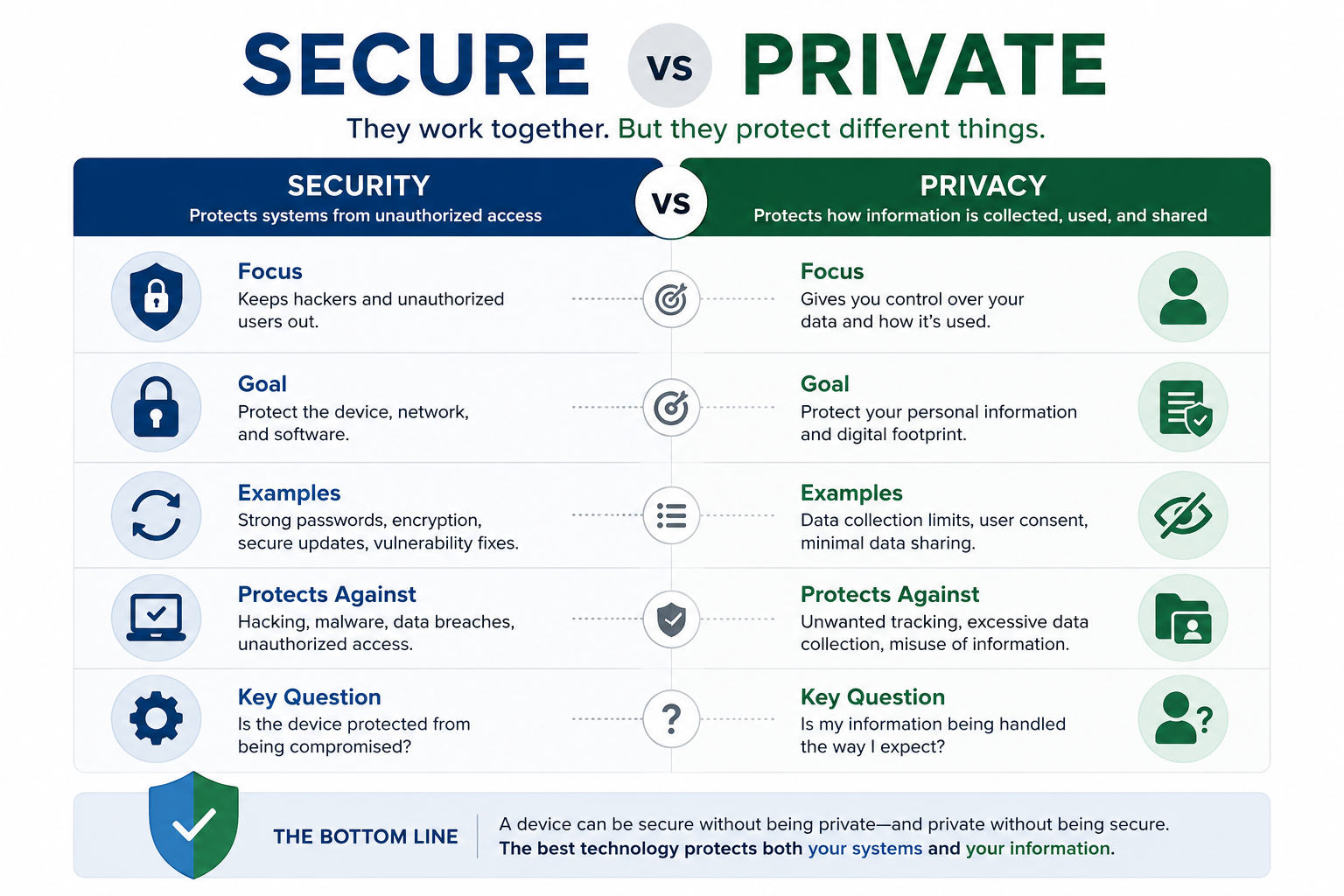
Questions About Privacy
Consumers may also want to understand:
- What information does the device collect?
- Does the device require cloud connectivity?
- Can features function locally?
- Is telemetry optional?
- Can stored information be deleted?
Some products rely heavily on cloud services, while others offer more local functionality.
Neither approach is automatically better for every use case, but transparency helps consumers align products with their preferences.
Questions About Longevity
As connected technology becomes more integrated into daily life, durability increasingly includes software support.
Helpful questions may include:
- What happens if the company shuts down?
- Will the device still function offline?
- Does the product rely on subscriptions?
- Can the system integrate with other platforms?
These considerations are becoming more important as homes accumulate larger ecosystems of connected devices over time.
Why Consumer Awareness Matters
The Cyber Trust Mark is ultimately designed to support informed decision-making.
As smart homes continue evolving, consumer awareness itself may become one of the most important layers of security. Read more about how your smart home collects data here. Or about how wearable technology can pose a similar challenge here.
The Beginning of a Larger Conversation
The Cyber Trust Mark will not answer every question surrounding connected technology.
It does not attempt to solve every issue related to:
- privacy
- cloud infrastructure
- behavioral data
- long-term digital governance
Its focus is narrower: improving visibility into cybersecurity practices for connected consumer devices.
Still, the program reflects something much larger happening across technology and society.
For years, most connected systems operated largely as black boxes. Devices appeared in homes with little visibility into:
- software maintenance
- support timelines
- update expectations
- cybersecurity standards
The Cyber Trust Mark represents a shift toward making at least part of that ecosystem more visible to ordinary consumers.
That shift matters because connected technology is no longer peripheral. Increasingly, it is becoming part of the infrastructure of everyday life.
Lights. Locks. Cameras. Wearables. Voice assistants. Environmental sensors.
As these systems become more integrated into homes and routines, consumers are beginning to ask not only:
“What can this technology do?”
but also:
“How does it work, and how is it maintained over time?”
The Cyber Trust Mark may ultimately be remembered less as a single label and more as part of a broader transition toward greater transparency around connected systems.
Not because consumers suddenly want to become cybersecurity experts, but because trust itself is becoming a visible part of modern technology design.
Frequently Asked Questions
What is the U.S. Cyber Trust Mark?
The U.S. Cyber Trust Mark is a voluntary FCC cybersecurity label for qualifying wireless smart devices.
Does the Cyber Trust Mark guarantee privacy?
No. The program primarily focuses on cybersecurity standards rather than broader privacy practices.
What devices qualify for the Cyber Trust Mark?
Examples include smart cameras, voice assistants, fitness trackers, and smart appliances.
