
When Digital Systems Fail Financial Professionals…
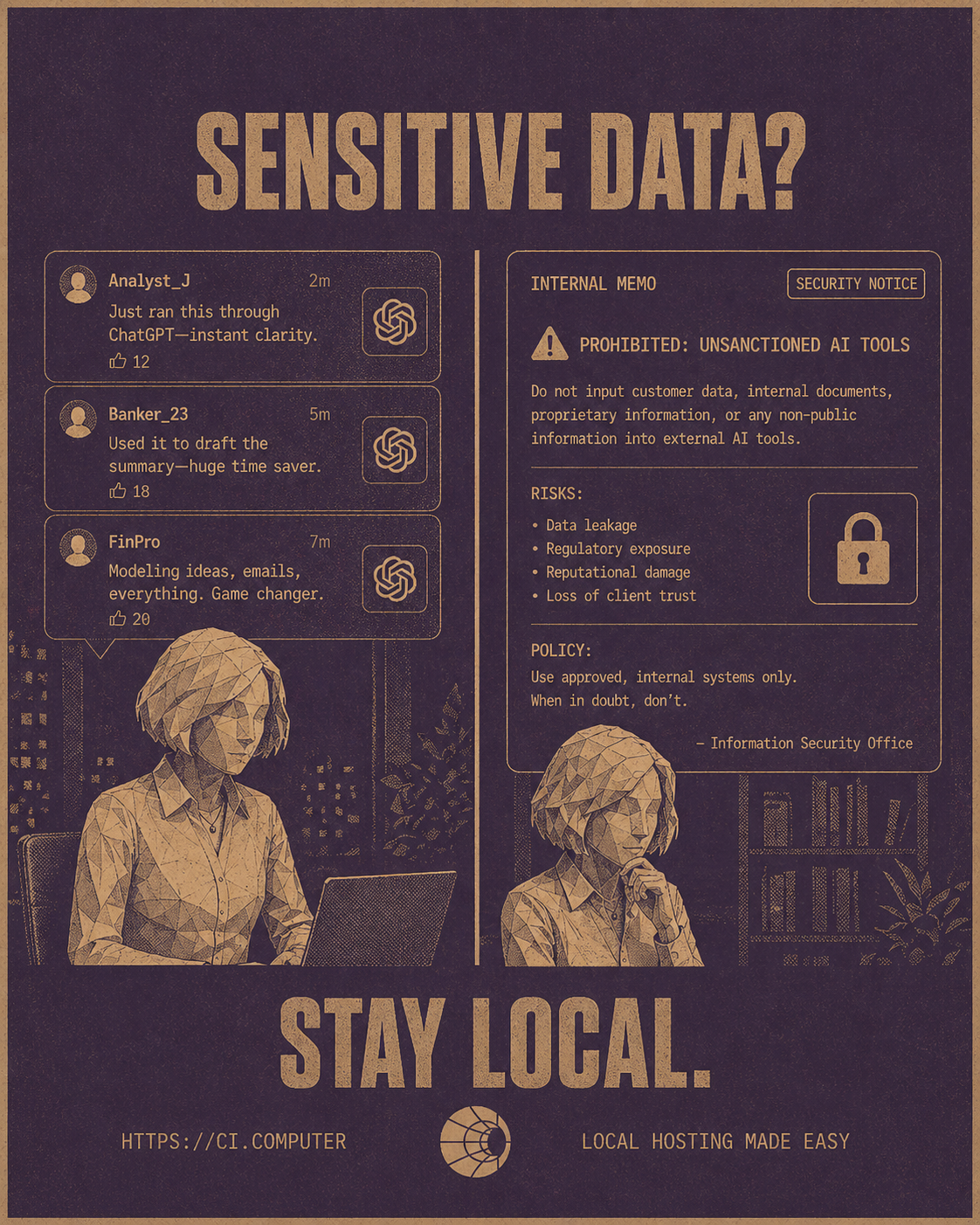
The Illusion of Control
From the outside, financial systems look precise.
Dashboards update in real time. Transactions reconcile. Controls appear layered and complete.
Inside the system, the expectation is simple:
Everything is tracked. Everything is auditable. Everything is under control.
But when something goes wrong, the system doesn't take responsibility.
You do.
What You're Actually Operating
Modern financial workflows are not single systems. They are stacks:
- Payment infrastructure
- Internal ledgers
- Compliance layers
- Third-party integrations
- Cloud-based tools
Each layer works. Each tool functions. But no single view shows the whole. What you're operating is not a system. It's a chain of dependencies.
When the System Acts—And You Can't Stop It
In 2020, Citigroup mistakenly sent nearly $900 million to lenders in what became the Revlon payment case.
The transfer was not a rogue event. It was executed through the system as configured.
- Interfaces were complex.
- Processes were layered.
- Signals were misinterpreted.
The system behaved consistently, but the outcome was wrong. And once the money moved, control didn't just weaken. It disappeared.
What followed wasn't a technical fix. It was a legal battle over whether the funds had to be returned.
When Visibility Breaks Down
Regulators have been identifying a quieter version of the same problem.
FINRA has fined firms for failing to properly retain and supervise communications across modern tools: messaging platforms, cloud applications, and decentralized workflows.
Communication didn't stop.
It moved across systems that weren't unified, tracked, or fully visible. And when firms were asked to produce records, the issue wasn't misconduct. It was fragmentation.
They couldn't prove what happened.
The Pattern
These failures don't come from lack of intelligence.
Or lack of process.
They come from a structural shift:
- Systems become more powerful
- Workflows become more distributed
- Visibility becomes partial
At a certain point, the system becomes more complex than the operator.
And yet the operator remains fully accountable.
The Real Risk
Financial professionals are not just using tools.
They are signing off on outcomes.
Approving transfers. Validating records. Attesting to compliance.
But when the system spans multiple environments—internal, external, cloud, vendor—
The question changes:
Can you actually see the full path of what just happened?
If the answer is no, control is already compromised.
And in finance, lack of control doesn't stay theoretical.
It becomes liability.
What's Actually Failing
It's not automation. It's not human judgment.
It's architecture. Fragmented systems create:
- Gaps in visibility
- Breaks in auditability
- Delays in understanding cause and effect
The system executes faster than it can be interpreted.
What Control Actually Requires
Control is not more dashboards. It's not more alerts. It's not more layers. Control comes from collapsing the system into something you can fully observe.
A unified environment where:
- Data doesn't move across unknown boundaries
- Actions are traceable end-to-end
- Context persists alongside execution
Not across tools, but within one system.
A Different Model
A local-first architecture changes the structure entirely. Instead of distributing context across platforms, it consolidates it:
- Core data remains within a defined environment
- Systems operate on shared, persistent context
- Every action is visible within the same boundary
Companion Memory becomes the connective layer—not just storing records, but preserving:
- Why a decision was made
- What conditions led to it
- How it evolved over time
You don't just see what happened. You see how and why it happened.
Final Takeaway
Financial systems don't fail all at once. They fail gradually. Layer by layer. Integration by integration. Until the person responsible for the outcome can no longer see the full system that produced it.
If you can't see the system, you don't control it. And in finance, lack of control isn't a technical problem. It's a professional one.
